
Healing damaged emotions (HDE) is largely synonymous with “inner healing.” It is a type of counseling/prayer ministry. Traditional counseling and therapy are important and have their place, but they are different and work well in addition to or after HDE. HDE is not a replacement, nor is it better. It goes to the level of the spirit (in a body, soul, spirit distinction), and it does so by the leading of the Holy Spirit.
HDE is like spiritual heart surgery. The Holy Spirit is the physician. The person leading the ministry facilitates between the recipient and what the Holy Spirit reveals and does. The process is psychological but goes beyond that and is deeply spiritual in nature. The facilitator expects and follows the Holy Spirit’s leading.

The Psalms express God’s healing of the human heart: 34:17–18; 146:7–9; 147:3. We seek to help people receive and act on what God does.
Emotional problems do not mean a person is unspiritual. They’re wounded. Trying to overcome or ignore emotional damage by appearing “spiritual” or “holy” only covers up the problem. And because of that it actually gets worse. This “masking” can also lead to physical illness.
Every experience a person has had is stored in the brain, whether it is consciously remembered or not. And the feelings that went along with the experience are also stored in the brain, inseparable from the memory of the experience. Past memories replay like a DVD and continue to affect the present, often with negative impact.
The memories cannot be removed without debilitating drugs or removal of frontal lobes of the brain. What HDE does is to change the emotion associated with the memory. Shame is covered, impurity is cleansed, anger is released, repentance is done, sin is forgiven, forgiveness is given to others, identities are changed, new perspectives are seen, wrong thinking is changed into right thinking, old chains are broken, and new starts are made.

More than any other kind of prayer or counseling ministry, HDE requires that the subject be open and in agreement with what needs to be healed and with the Holy Spirit’s leading. This can be difficult and painful. No one likes to open old wounds. Because of this, some people get stuck in survival mode and never get healed.
HDE can actually be more challenging than physical healing. This is because the body doesn’t talk back, but the mind does. The person undergoing healing must want to be healed (as Jesus said, “according to your faith”). And many people back away. Also, a person must do his or her part, which may include things like confession, forgiveness, letting go, aligning their thinking with Scripture, and practicing spiritual disciplines.
HDE intends to open wounds in order to heal then close them, not to do ongoing counseling. The person receiving the ministry must first make a choice: either to go through life with dull, aching pain, or for a brief period to go through sharp, stabbing pain in order to receive healing. Some people withdraw and never heal; some reach a stage where they heal dramatically; others go through a long and arduous process. Everyone is different.
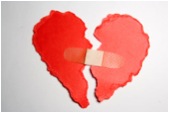
To be transformed by the renewing of our minds (Romans 12:2), it’s essential that we are emotionally and psychologically healthy. If not, unresolved hurts, bitterness, confusion, and damaged identity can block or subvert our personal growth such that the promises of the Christian life dangle out of reach because of the ensnaring bondage that emotional damage lays on a person.
Occasionally God works supernaturally to bring healing to people without any other therapy, counseling, HDE, or other intervention. A lot depends on the person, and a lot depends on the damage that was done. Most people benefit by going through some kind of guided healing process, often in combinations.
Telltale signs of being emotionally healed are that when we recall a previously painful memories, we have little or no emotional or physical reaction: our heart rate doesn’t increase; we don’t feel angry or sad, we don’t take deep breath or lose our breath; we don’t clench our teeth, shiver, or feel tension.
The ultimate level of emotional healing is when a person goes beyond recovery to open up about his or her own life and become an agent of healing to others who are wounded in similar ways.
—-





I wrote to you earlier and you responded. I am a woman of 68 years old. I have lived through an incest relationship with my adopted father from the age of 4 years old until I was 13. My adopted fathers’ brothers used me for this purpose too. They said they wanted to keep it in the family. I ran away and got raped while on the streets with nowhere to go. When I was 16 I was brutally raped and was with child that I had to raise. Standing at a bus stop on my way to church I and my child were at gunpoint made to get in the car where my child was made to lay down in the back seat while the man raped me. Then told to get out of the car he would have to kill my son and I. Rather while standing there with our backs away waiting for the bullets to fire the man drove away.I ran to the church as a safe place and got more sexual abuse by the Bishop. My trying to trust and relate to God has been so hard. I keep reliving my past and wonder why God never stopped this and how I am to relate Love to this. My mother blamed me for the sexuall abuse till the day she died the verbal and physical abuse from her was so confusing and how I never was able to be a daughter to her and win her love and approval still torments me today. I know I should be over this stuff but I am not. I have tried therapy only to find that I still have the same issues.
I am so sorry to read all this. You were so abused. And I also struggle to grasp how God allows this.
If you can, focus on how God felt the horror and abuse with you, that he will absorb it as you give it over to him, and that he will renew you in righteousness.
I know that sounds simple, but that’s the core of the kind of approach I take in ministering to rape victims. It’s always messy, but the core approach is one that had greatly helped many victims.